Embracing Creativity: Stress-Buster Extraordinaire

Jessica is a high school English teacher.  Her job entails stressful interactions with administration and students in addition to the pressures of lesson planning and grading.

On days off, she prioritizes creative pursuits.  She makes collages out of artifacts from world travels to Turkey and South America.  She takes dance classes.  Photography provides another way to untangle her mind from the pressures of her daily teaching work.

Jessica says that creativity gives her a chance to play—to do something where the stakes are low and there’s no judgment.  “Without these creative outlets I would be a lot less fun in the classroom and less open to the whimsical creativity of my students,” she says.  “I’d definitely be more stressed out and wouldn’t enjoy teaching so much.”

As Jessica’s story shows, in a fast-paced world, creativity can be a fantastic tool for reducing stress.  Whether we make collages, plant a garden, toss paint onto a canvas or play the guitar—stress tends to go out the window when we let our creativity run wild.

Why Incorporate Creativity into our Daily Lives?
According to Ruth Richards, author of Everyday Creativity, creativity is necessary and attainable for everyone.  It is “one of the most powerful capacities we have, bringing us alive in each moment, affecting our health and wellbeing, offering richness and alternatives in what we do, and helping us move further in our creative and personal development.”

Exploring, experimenting, playing and entering the unknown—through anything from travel to taking an improv class to cooking—are all ways to practice creativity.  You can also incorporate creativity into the workplace, finding ways to add spark and delight to otherwise mundane activities.  For example, give yourself time to daydream at work if possible.  Experiment with new ideas and ask questions.  One newspaper editor encourages his staff to indulge their creative side through humor, listening to music and brainstorming sessions because it leads to better work, an assertion seconded by many business experts.

The Importance of “Flow”
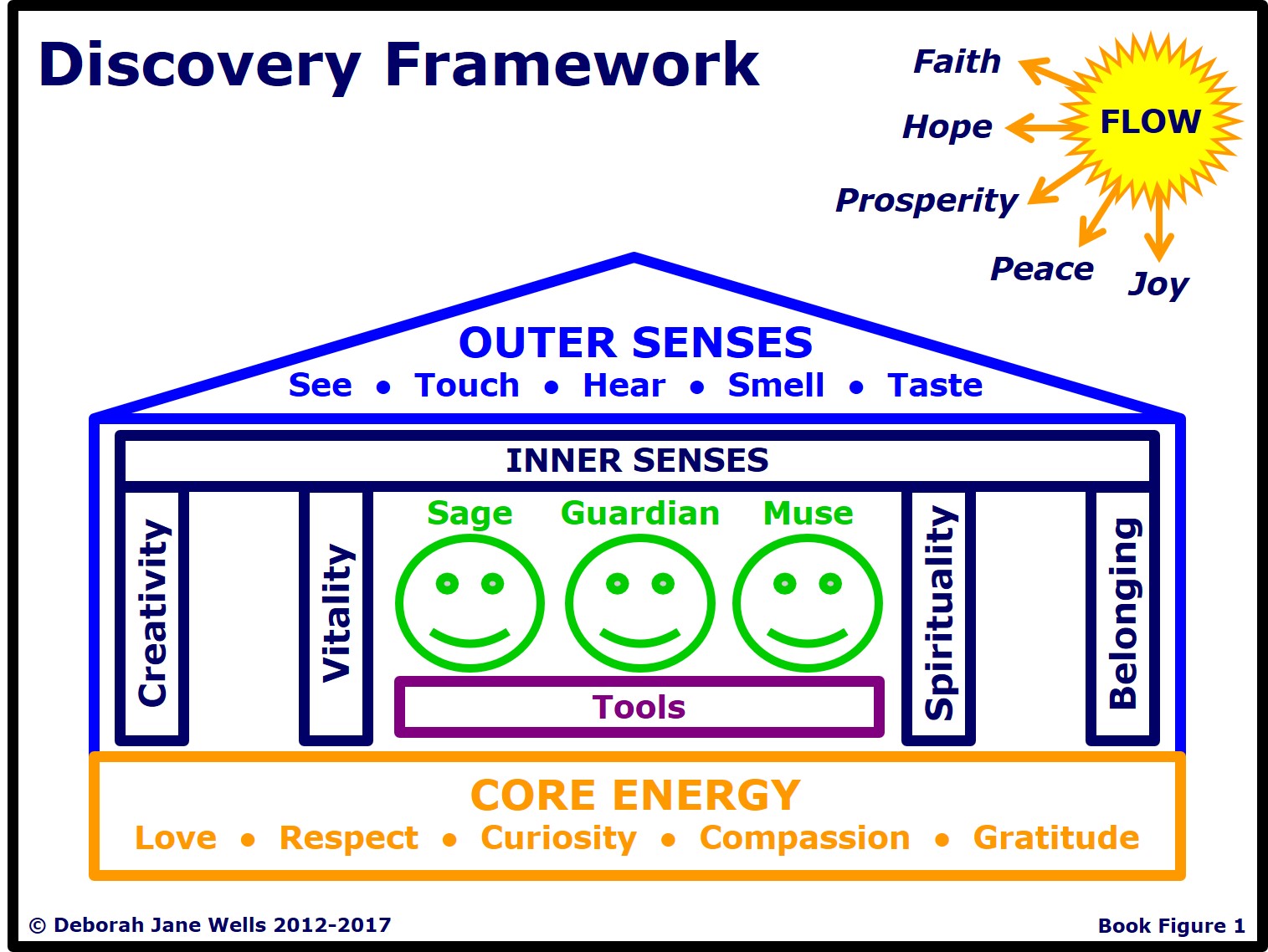
Creativity also leads to experiencing “Flow,” which studies show is beneficial, says Elissa Bowes-Arbeitman, an art therapy consultant.  “Flow refers to a state of being completely engaged in something to the point of being in a near meditative state, leaving you much less stressed when you are done.  You can experience this feeling when you are doing creative activities like writing and gardening.  You can also experience this feeling from engaging in the creative art-making process,” she says. 

So, invent a new dessert, write a song or travel to Tuscany!  It just might mean the difference between stressing out to the max—and getting sick in the process—or living out your days happier and healthier!  What have you got to lose, other than your stress?

Author’s content adapted under license, ©2008 Claire Communications
Posted in All My Blog Posts, Creativity & Self-Expression, Joy & Vitality, Stress, Perfectionism & Burnout | Tagged , , , , , , , , , | Leave a comment

10 Common Sources of Stress

Ask people why they’re stressed and they’re likely to say that it’s these infernal deadlines or too much work and too little staff, or perhaps the family’s overpacked schedules.  And while these can certainly add to a pressure-cooker atmosphere, they’re not really the greatest cause.  At fault more than anything is the tremendous internal pressure and anxiety that we create for ourselves through the following:

: Self-criticism.  Tame your inner critic, focus on your strengths and let yourself off the hook. 

2: Powerlessness.  We are powerful beyond measure.  Open your eyes and see all the choices available to you. 

3: Perfectionism.  Do your best, but let the elusive “perfect” go. 

4: Worry.  Faith and action are the best antidote to worry, especially when it comes to  situations we cannot control.

5: Unrealistic expectations.  Life will never be problem-free.  Like a great chili, it’s the blend of diverse ingredients, from spicy to soothing, that gives life its rich flavor.

6: Insecurity.  Everything we need is already inside each one of us.  Stop expecting to find it outside yourself.

7: Hurrying.  Try walking slower, chewing slower and working at a steady, not frantic, pace.  You might be surprised to find yourself performing better.

8: Other people’s opinions.  This is your unique life.   The question is whether you are meeting your own standards, not someone else’s. 

9: Pessimism.  The laws of Physics teach us that energy attracts like energy.  When we expect the best from life, we have a way of attracting it.  Even when it comes wrapped in a difficult package. 

10: Competition.  Try turning every encounter into a win-win situation rather than a win-lose one. 

 Author’s content adapted under license, © 2008 Claire Communications
Posted in All My Blog Posts, Stress, Perfectionism & Burnout | Tagged , , , , , , | 1 Comment

High Hopes

No matter your situation, what is the one thing you can always control?  Your attitude.  Your mindset.  Your beliefs.  Here are some possibilities to get your optimistic juices flowing.

“The greatest discovery of my generation is that a human being can alter his life by altering his attitudes.”  William James

“I am an optimist.  It does not seem too much use being anything else.”  Winston Churchill

“The test of a first-rate intelligence is the ability to hold two opposed ideas in the mind at the same time, and still retain the ability to function.  One should, for example, be able to see that things are hopeless and yet be determined to make them otherwise.”  F. Scott Fitzgerald

“A happy person is not a person in a certain set of circumstances, but rather a person with a certain set of attitudes.”  Hugh Downs

And just for fun, “A positive attitude may not solve all your problems, but it will annoy enough people to make it worth the effort.”  Herm Albright, quoted in Reader’s Digest, June 1995

The next time you struggle with a seemingly impossible situation, Get Curious!  If everything’s an opportunity, where might the opportunity be in this situation.

The Universe is far more creative than we can imagine.  So assume the best and look for the silver lining in even the darkest cloud.

© Copyright 2012 DJW Life Coach LLC. All rights reserved.
Posted in All My Blog Posts, Curiosity, Respect & Compassion, Gratitude, Prosperity & Abundance, Stress, Perfectionism & Burnout | Tagged , , , , , , , , , , , , | Leave a comment

How Good is Your Balance?

If trying to maintain balance in your life leaves you feeling like a tightrope walker, you’re not alone.  Most of us have so many demands on our time and energy, life can feel like a three-ring circus.  Take this quiz to see how well you are meeting responsibilities, while also recognizing and fulfilling personal needs and desires.

1:  I achieve a balanced life by nurturing myself physically, mentally, emotionally and spiritually.  True/False

2:  Nurturing myself enlarges my capacity to help others.  True/False

3:  I eat healthy foods, exercise regularly and refuel myself through rest.  True/False

4:  I invest in regular preventive health care and wellness, along with timely treatment of any illnesses.  True/False

5:  I set aside personal, quiet time for myself, whether I’m meditating, journaling or simply letting my thoughts drift.  True/False

6:  I experience the gifts of each season outside and indoors.  True/False

7:  Creativity nurtures me, too.  I do what I love, whether that’s cooking, drawing, painting, writing, dancing, singing or another creative pursuit.  True/False

8:  Reaching out to others enriches my life.  I spend quality time with family and friends.  True/False

9:  Contributing to the world provides connection and purpose.  I invest my time, energy and experience where it can best serve the Highest Good for all.  True/False

10:  I notice the emotional signals that tell me I’m out of balance:  irritability, overwhelm and resentment.  I invest my attention and energy in restoring my sense of Wholeness.  True/False

11:  I notice the physical signs of illness.  Realizing I may have stressed my immune system with overactivity or stress, I stop, take care of myself and adjust my perspective and commitments.  True/False

12:  I do not overcommit myself.  I say “no” to additional requests for my time when I realize they will put my mental, physical, emotional or spiritual wellbeing in jeopardy.  True/False

13:  I listen to and honor the requests my body makes for such things as a nap, a walk, green vegetables and hot soup.  True/False

14:  If I have something planned for myself, I don’t just toss that aside when someone makes a request of me.  True/False

15:  No matter how busy I may be, I make time for the things that bring me joy and fulfillment.  True/False

16:  My life is a Journey to Wholeness.  I experience deep peace, lasting joy and meaningful relationships.  True/False

If you answered false more often than true, one of the best ways to begin shifting to a greater sense of fulfillment is to identify baby steps that will move you in the direction of better balance.

If you’d appreciate some help getting started, click here to schedule a 60-minute complimentary coaching session.

Author’s content adapted under license, © 2011 Claire Communications
Posted in All My Blog Posts, Stress, Perfectionism & Burnout | Tagged , , , , , , | Leave a comment

Stress: Name It and Tame It

Would you be surprised to learn that stress has been named as an underlying factor in up to 90% of illnesses? 

One of the best ways to manage stress in your life is to first become aware of exactly what it is that causes you stress, because if you can name the stressors, then you can take the necessary steps to shift your perspective and neutralize the negative impact they have on you.

One such technique is called “Name It and Tame It.”   Write down what stresses you, being as specific as possible.  In other words, instead of writing down the word “work,” write down what it is about work that causes you stress:

  • Miscommunication with co-workers
  • A sense of overwhelm from a huge new project
  • Feeling unappreciated by your boss
  • Balancing work and the needs of your family

Having greater clarity will help combat any victim mindset.  From that renewed place of personal power, you can get unstuck and begin making decisions to reduce stress and move you forward into a life you love.

© Copyright 2012 DJW Life Coach LLC. All rights reserved.
Posted in All My Blog Posts, Stress, Perfectionism & Burnout | Tagged , , , , , , | Leave a comment

Recognizing and Avoiding Burnout

“My candle burns at both ends/it will not last the night.”  Edna St. Vincent Millay

Burnout resists simple definition because it affects so many aspects of life. In their book, Beyond Burnout, authors David Welch, Donald Medeiros and George Tate, describe burnout as a condition that affects us physically, intellectually, emotionally, socially and spiritually.

One of the first physical symptoms of burnout is fatigue.  Intellectually, there may be a loss of creativity and sharpness in problem solving; cynicism may replace enthusiasm. Emotionally, the loss of dreams and expectations can result in feelings of helplessness and depression.  In the social realm, isolation overtakes feelings of involvement. Spiritually, the person experiencing burnout may feel a lack of meaning or struggle with finding a purpose in life.

According to a recent study, one in three Americans is expected to burn out on the job in the near future and, in the two years preceding the study, 14% of the work force quit or changed jobs due to job stress.  But burnout can happen in all walks of life, not just on the job.  How can you avoid becoming one of the burnout statistics?

Recognizing Burnout

  • Feelings of frustration, overwhelm and never being caught up,
  • A sense of losing control over how you live and what happens in your life,
  • Emotional outbursts,
  • Withdrawal and isolation,
  • Dreading going to work,
  • Frequent sickness, low energy or other health problems,
  • Self-medicating through over consumption of alcohol, drugs or food, and/or
  • A desire to quit or run away, along with a fear of doing so.

Taking a few days off or a vacation to Tahiti won’t contain the burnout.  Neither will simply leaving one job or situation for another.  Burnout has more to do with an individual’s attitudes and behavior than it does with his or her external situation.  It is primarily an act of self-destruction.

Avoiding Burnout

 1: Self-management.  Set specific, realistic goals that are aligned with your values and communicate them clearly to others.

 2: Stress management.  Know your own responses to stress and develop a plan to manage them.  Exercise, take breaks, eat healthy, leave work at work, make time for play and rest.  Discover what works best for you and your body and practice consistent, nurturing self-care.

3: Support systems.  Family, friends, co-workers, spiritual groups and other organizations can help in times of stress.

4: Skill building.  Look for opportunities to leverage and further develop your natural skills, talents and abilities.  Encourage your continued growth rather than stagnation.

5: Balance.  Seek an intentionally balanced life.  Feed your soul by infusing your life with relationships and activities that matter to you.

6: Think positive.  Helpless thinking is a major contributor to burnout. Replace negativity with optimism.  Everything’s an opportunity.  Look for the silver lining in even the darkest cloud.

7: Be creative.  Adopt a new perspective.  Try a different approach to your unpleasant situation and perceived problems.  Break free from your everyday routine.  Let your workspace express your individuality.

8: Humor and playfulness.  Humor reduces stress, promotes physical healing, is essential for mental health and can add years to your life.  No wonder they say laughter is the best medicine.  Make enjoying yourself and your life a priority.  You matter!

Author’s content adapted under license, © 2008 Claire Communications
Posted in All My Blog Posts, Stress, Perfectionism & Burnout | Tagged , , , , , , | 1 Comment

To Do or Ta Dah, That is the Question

Not feeling appreciated by others for all we do can be a big source of stress. While we can’t change others into the appreciative, encouraging people we’d like them to be, a natural extension of our personal gratitude practice is appreciating and encouraging ourselves.

Too often, we get to the end of the day and focus on all we didn’t get done rather than all that we did. The beatings continue until morale improves, which of course it never does.

How about switching to a motivational best practice? How about making a Ta Dah List instead?  It would include not only the items you did manage to cross off your To Do list, but also some of the other things you deserve credit for — the “non-tasks” that are often overlooked.

Did you treat an annoying coworker with respect, even though you were frustrated?  Ta Dah! Good for you!  Did you speak up in a meeting, even though you were feeling hesitant?  Ta Dah! Way to go!  Did you keep your cool in a traffic jam? Ta Dah! You totally rock!

True appreciation includes paying attention to what you are “doing” and who you are “being”. Are you doing what you want to do? Appreciate all you do. Are you being who you want to be? Appreciate who you are.

Appreciating who you are and all you do will boost your immunity to stress, increase your joy and foster Flow. Who wouldn’t say a big Ta Dah to that?

© Copyright 2012 DJW Life Coach LLC. All rights reserved.
Posted in All My Blog Posts, Stress, Perfectionism & Burnout | Tagged , , , , , , | Leave a comment

An Attitude of Gratitude

The practice of gratitude as a tool for happiness has been in the mainstream for years. Long-term studies support gratitude’s effectiveness, suggesting that a positive, appreciative attitude contributes to greater success in work, greater health, peak performance in sports and business, a higher sense of well-being and a faster rate of recovery from surgery.

While we may acknowledge gratitude’s many benefits, it can still be difficult to sustain. We’re trained to notice what’s broken, undone or lacking in our lives. For gratitude to meet its full healing potential, we need a new perspective. Sustained repetition will help these healthy new behaviors become healthy new habits.

That’s why practicing gratitude makes so much sense. When we practice giving thanks for all we have, instead of complaining about what we lack, we give ourselves the chance to see all of life as an opportunity and a blessing.

Remember that gratitude isn’t a blindly optimistic approach in which the bad things in life are whitewashed or ignored. It’s more a matter of where we put our focus and attention. Pain and injustice exist in this world, but when we focus on the gifts of life, we gain a feeling of well-being. Gratitude creates balance and instills hope.

There are many things to be grateful for: colorful autumn leaves, legs that work, friends who listen and really hear, chocolate, fresh eggs, warm jackets, tomatoes, the ability to read, roses, our health, butterflies. What’s on your list?

Some Ways to Practice Gratitude

  • Keep a gratitude journal in which you list things for which you are thankful. You can make daily, weekly or monthly lists. Greater frequency may be better for creating a new habit, but just keeping that journal where you can see it will remind you to think gratefully.
  • Make a gratitude collage by drawing or pasting pictures.
  • Practice gratitude around the dinner table or make it part of your nighttime routine.
  • Make a game of finding the hidden blessing in a challenging situation.
  • When you feel like complaining, make a gratitude list instead. You’ll be amazed by how much better you feel.
  • Notice how gratitude is impacting your life. Write about it, sing about it, give thanks for gratitude.

As you practice, an inner shift begins to occur.  You will be delighted to discover how content and hopeful you are feeling. That sense of fulfillment is gratitude at work.  And that gratitude will foster Flow—an effort-less, stress-less, joy-filled existence based in Who you are Being NOT What you are Doing.

Author’s content adapted under license, © 2011 Claire Communications
Posted in All My Blog Posts, Gratitude, Prosperity & Abundance, Stress, Perfectionism & Burnout | Tagged , , , , , , , , , | 1 Comment

Fostering Flow: Part 3 of 3

Here’s the final installment (for now) in the Tools for Fostering Flow.  Getting the hang of the Flow thing yet?  Relishing the sheer delight of an effort-less, stress-less, joy-filled existence based in Who you are Being NOT What you are Doing?

Here are five more tools to take you even further on your Journey to Wholeness by super-charging your ability to tame stress and foster Flow:

10: Trust Your Gut – You have inside you all the wisdom you seek.  Instead of stressing yourself out by fighting your instincts or feeling compelled to justify your hunches with logic, try trusting your intuition for a change.

11: Behave As If – There are two aspects to this one:  If you gave yourself the same care and attention you give your friends and loved ones, what support would you give yourself right now?  And, what would you dare to do if you believed you couldn’t fail?

12: Take Baby Steps – Great cathedrals get built one stone at a time.  Your dreams are the same.  Don’t try to take it all on at once.  Identify the next small step and take it.  And another, and another, and another.  Before you know it, you’ll have built the life you dream of.

13: Celebrate – Every step forward is a cause for celebration.  Every time you move closer to your dreams, pat yourself on the back with a party moment!  Ta Dah!  That moment of self-affirmation will release additional positive fuel to keep you moving forward.

14: Time for What Matters – Time is not a scarce resource.  You have all the time you need for the things that matter.  Your sole responsibility in each moment is to discern what matters most right now, focus and follow through.  Using the other tools will help clear the path for you to tap into your deepest wisdom and move forward, in each moment, with confidence, peace and joy.

© Copyright 2012 DJW Life Coach LLC. All rights reserved.
Posted in All My Blog Posts, Force, Flow & Baby Steps, Mindfulness, Meditation & Peace, Stress, Perfectionism & Burnout | Tagged , , , , , , , , , | Leave a comment

Fostering Flow: Part 2 of 3

We pick up where we left off in the previous blog post.  How have you been doing in your quest for Flow — that effort-less, stress-less, joy-filled existence based in Who you are Being NOT What you are Doing?

Here are four more tools to take you further on your Journey to Wholeness by boosting your ability to minimize stress and foster Flow:

6: Talk To Yourself – It’s the smartest crazy thing you’ll ever do.  It improves your sense of perspective, creativity and humor.  You might discover that what you were dreading may actually be a great opportunity.

7: Write It Down – Getting stressful thoughts out of your head and onto paper can also improve your sense of perspective.  Often, just putting them in writing reduces them to a more manageable size you can begin to get your arms around.

8: Move It – When in doubt, move about.  A gentle walk around the office or the block will begin releasing natural tranquilizers and restoring full breathing.  And it feeds your creativity so you’ll be able to come up with more creative options for handling your situation.

9: Hydrate – Water fosters flow.  Drink.  Shower.  Bathe.  Swim.  Play.  Cry.  Hydrate yourself in every way imaginable and watch yourself flow through the ups and downs of life with greater flexibility, creativity and perspective.

© Copyright 2012 DJW Life Coach LLC. All rights reserved.
Posted in All My Blog Posts, Force, Flow & Baby Steps, Mindfulness, Meditation & Peace, Stress, Perfectionism & Burnout | Tagged , , , , , , , , , | Leave a comment